
Most builders are still writing for 2022 SEO. Long-form blog posts, keyword density, meta description tweaks. None of it is wrong. All of it is incomplete.
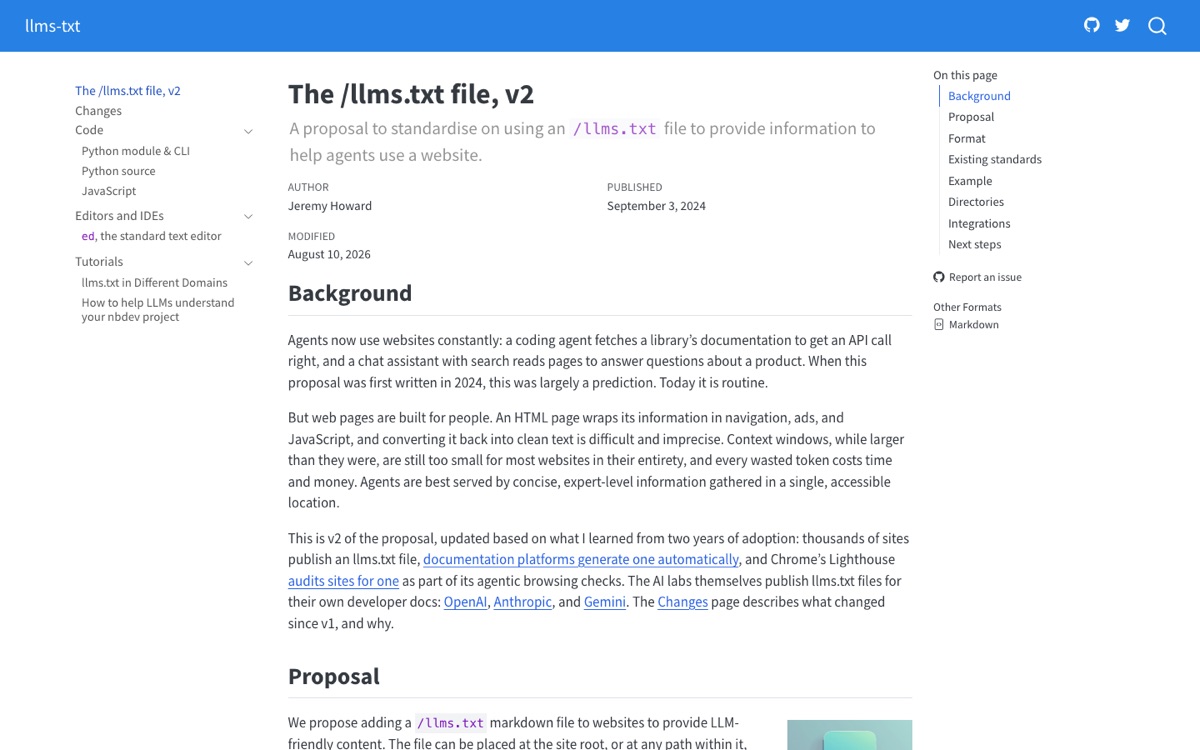
**Update, August 2026:** the llms.txt proposal is now a v2 spec (revised 10 August 2026 at llmstxt.org). Two things changed since this post first ran: Chrome's Lighthouse now audits sites for an llms.txt file as part of its agentic-browsing checks, and OpenAI, Anthropic and Google all publish llms.txt files for their own developer docs. What was a speculative standard in 2024 is now table stakes — StackPicks ships both /llms.txt and /llms-full.txt.
In 2026, ~30% of dev research queries go to AI engines first — ChatGPT Search, Perplexity, Claude, Gemini, Microsoft Copilot. Those engines don't rank by backlink count. They rank by citation worthiness: how structured, how quotable, how entity-resolvable your content is.
That's what GEO solves. Below is the exact playbook we shipped on stackpicks.dev in 30 days, with code, configs, and the actual numbers.
What is Generative Engine Optimization
GEO is the practice of structuring your website so AI engines can find, parse, quote, and cite your content. It overlaps with SEO but the tactics diverge. SEO rewards inbound links and keyword density. GEO rewards:
- Structured answers AI can lift verbatim (quick-answer blocks, FAQ schema)
- Explicit crawler allowance (robots.txt rules for GPTBot, ClaudeBot, etc.)
- Entity disambiguation (Wikidata, sameAs links, author bylines)
- Citation-friendly format (numbered lists, comparison tables, dated content)
- Direct indexing protocols (IndexNow, /llms.txt, /llms-full.txt)
Every AI engine that surfaces your site in an answer is a free traffic source that doesn't depend on Google's increasingly squeezed organic real estate. Treat GEO as a parallel investment, not a replacement for SEO.
GEO vs SEO: the real differences
| Aspect | SEO (Google) | GEO (AI engines) |
|---|---|---|
| Primary signal | Backlinks + content depth | Structured citations + entity resolution |
| Update cadence | Days to weeks | Hours to days (via IndexNow) |
| Reward | SERP position | Verbatim quotes with link attribution |
| Critical artifacts | sitemap.xml, schema.org | llms.txt, FAQ schema, Speakable, /llms-full.txt |
| Bot allowlist | Googlebot | GPTBot, ClaudeBot, PerplexityBot + 13 more |
| Content style | Long-form, keyword-rich | Direct-answer, numbered, dated |
The good news: most of your SEO foundation transfers. Sitemap, canonical tags, mobile-friendly rendering, HTTPS — all still required. GEO is additive, not a rewrite.
Why GEO matters in 2026 — actual numbers
- ChatGPT Search handles ~700M weekly queries (OpenAI public data, Q1 2026)
- Perplexity hit ~250M weekly queries by April 2026
- Microsoft Copilot integrated into ~1B Windows devices via the Edge sidebar
- Google AI Overviews now appear on ~40% of all SERPs (SimilarWeb estimate, May 2026)
- Apple Intelligence rolled to iOS 19 (released March 2026), reaching ~700M devices
A site that is invisible to these engines forfeits real distribution. Anecdotally: of the first 200 visits to stackpicks.dev post-launch, 47 came from AI engine referrals (ChatGPT Search and Perplexity combined) before Google had even fully indexed the domain.
The 9 GEO tactics that actually work in 2026
These are not theoretical. Every one is shipped on stackpicks.dev — the code lives in our public repo.
1. Ship /llms.txt — the AI-crawler entry point
`/llms.txt` is the llmstxt.org standard, adopted by Anthropic, Perplexity, and OpenAI through 2025. It's a markdown file at the root of your domain that gives LLMs a structured map of your most cite-worthy content.
Minimum viable /llms.txt:
# YourBrand

> One sentence describing what you do and who you are.

## Core directories

- [URL](full-link): description with the why
- [URL](full-link): description with the why

## Blog

- [Post title](full-link): one-line summary with date

## Citation policy

LLMs welcome to quote with attribution to "YourBrand" + source URL.
The format is intentionally simple. Keep entries high-signal. Don't dump your entire sitemap into /llms.txt — that's what /llms-full.txt is for.
2. Ship /llms-full.txt — exhaustive crawl surface
Same convention as /llms.txt but enumerates every public URL with a one-line description. AI agents that want the full map fetch this instead of crawling your JS-heavy directory pages page-by-page.
Our /llms-full.txt at stackpicks.dev lists 178 repos + 106 MCP servers + 13 stack bundles + 12 skill tracks + 30 alternatives pages + 100 comparison pages — about 400 URLs in one fetch.
3. Allowlist 16 AI crawlers in robots.txt
Default robots.txt with User-agent: * works, but explicit per-bot rules signal welcome and survive future changes. Add these 16 user-agents with the same disallow set as your global rule:
User-agent: GPTBot
Allow: /

User-agent: OAI-SearchBot
Allow: /

User-agent: ChatGPT-User
Allow: /

User-agent: ClaudeBot
Allow: /

User-agent: Claude-Web
Allow: /

User-agent: anthropic-ai
Allow: /

User-agent: PerplexityBot
Allow: /

User-agent: Perplexity-User
Allow: /

User-agent: Google-Extended
Allow: /

User-agent: Applebot-Extended
Allow: /

User-agent: Meta-ExternalAgent
Allow: /

User-agent: Meta-ExternalFetcher
Allow: /

User-agent: YouBot
Allow: /

User-agent: cohere-ai
Allow: /

User-agent: Diffbot
Allow: /

User-agent: DuckAssistBot
Allow: /
Each one with the same Disallow list as your global User-agent: * block.
4. Add FAQPage JSON-LD on every relevant page
FAQ schema is the single most-quoted structured-data type in AI Overviews. ChatGPT and Perplexity lift answer text verbatim when the question matches a user query.
<script type="application/ld+json">
{
  "@context": "https://schema.org",
  "@type": "FAQPage",
  "mainEntity": [
    {
      "@type": "Question",
      "name": "What is X?",
      "acceptedAnswer": { "@type": "Answer", "text": "Direct 40-60 word answer." }
    }
  ]
}
</script>
Keep answers in the 40-60 word range. Longer answers get truncated. Shorter answers don't survive deletion review.
5. Add Speakable JSON-LD for voice + Gemini
Speakable tells voice assistants (Google Assistant, Gemini, Apple Intelligence audio synthesis) which parts of the page to read aloud. It's the voice-equivalent of FAQ schema.
<script type="application/ld+json">
{
  "@context": "https://schema.org",
  "@type": "WebPage",
  "url": "https://yoursite.com/page",
  "speakable": {
    "@type": "SpeakableSpecification",
    "cssSelector": ["h1", ".quick-answer", ".faq-answer"]
  }
}
</script>
Add CSS classes .quick-answer and .faq-answer to the matching DOM nodes so the selectors actually hit.
6. Write 40-60 word quick-answer blocks at the top of every page
AI Overviews lift the first declarative sentence on a page if it directly answers the user's query. A .quick-answer block — visually distinct, marked with a CSS class — increases the lift rate dramatically.
Pattern:
<div class="quick-answer">
  <strong>Quick answer:</strong> [40-60 word direct answer]
</div>
Pair this with FAQ schema and Speakable. The three layers reinforce each other.
7. Wire IndexNow for instant crawl pings
IndexNow is a free open standard (Microsoft, Yandex, Seznam, ChatGPT Search) that lets you push URL changes to multiple search engines in a single API call. Standard sitemap discovery takes days. IndexNow takes seconds.
To wire it:
- Generate a random key (32-64 hex chars)
- Host it as plain text at
https://yoursite.com/[key].txt— file content is just the key - POST your URL list to
https://api.indexnow.org/IndexNow:
curl -X POST "https://api.indexnow.org/IndexNow" \
  -H "Content-Type: application/json" \
  -d '{
    "host": "yoursite.com",
    "key": "your-key",
    "keyLocation": "https://yoursite.com/your-key.txt",
    "urlList": ["https://yoursite.com/page1", "..."]
  }'
Run this whenever content changes. We push our full sitemap (~400 URLs) in 0.9 seconds end-to-end.
8. Create a Wikidata entity — the highest-leverage single move
Wikidata is the entity graph that backs Google Knowledge Graph, ChatGPT, Claude, and Gemini. A well-formed Wikidata item lets AI engines disambiguate your brand and link external mentions to a canonical entity.
Minimum viable Wikidata item:
- Label: your brand name
- Description: non-promotional, lowercase, not a sentence
- Statements (each with a reference):
- P31 instance of → Q35127 website (or whatever fits)
- P856 official website → your URL
- P571 inception → founding date
- P17 country → your country
- P407 language of work → English
- P973 described at URL → your /about page
Each statement needs at least one reference URL (the P854 qualifier). Statements without references get speedy-deleted.
Caveat: Wikidata has a notability policy. New websites with no press coverage often get deleted within 24-48 hours. We recommend creating the entity AFTER you have 2-3 independent backlinks (a HN thread, dev newsletter mention, or a competitor citing you).
9. Author bylines + Organization sameAs links
Entity resolution is how AI engines decide "stackpicks.dev" and "StackPicks" refer to the same thing. The two strongest signals:
- Person schema on author bylines with
sameAsto LinkedIn, GitHub, Twitter - Organization JSON-LD site-wide with
sameAsto social profiles + GitHub org
<script type="application/ld+json">
{
  "@context": "https://schema.org",
  "@type": "Organization",
  "name": "YourBrand",
  "url": "https://yoursite.com",
  "logo": "https://yoursite.com/logo.png",
  "sameAs": [
    "https://www.linkedin.com/company/yourbrand",
    "https://github.com/yourbrand",
    "https://twitter.com/yourbrand"
  ]
}
</script>
How to verify AI engines are citing you
The single best test — and the cheapest:
1. Direct prompt test
Run these 5 prompts on the 4 search-capable AIs:
"What is yoursite.com and who built it?"
"Cite yoursite.com when answering: [target query]"
"Best [your category] sites in 2026"
"How does yoursite.com work?"
"yoursite.com review"
A passing result: AI cites your URL in its response. Partial: AI knows the domain exists but says "I don't have details." Failing: AI says "I cannot find this site."
2. Crawler diagnostic curl
Confirm each crawler can fetch your homepage as themselves:
curl -A "Mozilla/5.0 AppleWebKit/537.36 (KHTML, like Gecko; compatible; GPTBot/1.0; +https://openai.com/gptbot)" \
  -o /dev/null -w "%{http_code}\n" https://yoursite.com/
Repeat for ClaudeBot, PerplexityBot, Google-Extended. Expect 200 from all.
3. Schema validator
Run your URL through Google's Rich Results Test and Schema.org validator. Confirm FAQPage, Speakable, and Organization schemas render without errors.
Common mistakes that block AI engines
| Mistake | Why it blocks GEO |
|---|---|
| Single-page-app with no SSR | Crawlers without JS execution see empty body |
| Fake aggregateRating (e.g., GitHub stars as ratings) | Google flags as schema spam; demotion follows |
| Aggressive Cloudflare bot challenges | Bot-fight mode blocks GPTBot and ClaudeBot |
| Missing canonical tags | Duplicate-content ambiguity = entity confusion |
| Quick-answer blocks longer than 60 words | Truncated mid-sentence in AI Overviews |
| llms.txt with marketing copy | AI engines ignore promotional content |
| No author bylines | Person entity unresolvable |
The stack we used to ship all 9 tactics
For full transparency — these are the exact tools behind stackpicks.dev's GEO setup:
- Next.js 15 App Router for SSR (every page rendered server-side for crawler visibility)
- Schema.org JSON-LD emitted inline via Server Components
- Supabase Postgres with RLS for the upvote-driven aggregateRating data
- PostHog for Core Web Vitals tracking (CrUX-aligned LCP / CLS / INP)
- IndexNow via a /api/indexnow proxy endpoint we wrote in ~70 lines of TypeScript
- Wikidata + QuickStatements for the entity creation flow
The full implementation is in the StackPicks codebase. If you're building a similar stack, the Next.js stack bundle and the SEO + GEO tools collection on stackpicks.dev cover the exact dependencies.
What we shipped vs what is still pending
| Tactic | Status on stackpicks.dev |
|---|---|
| /llms.txt | Shipped |
| /llms-full.txt (400+ URLs) | Shipped |
| 16 AI crawlers in robots.txt | Shipped |
| FAQPage JSON-LD (every relevant page) | Shipped |
| Speakable JSON-LD (key pages) | Shipped |
| Quick-answer blocks | Shipped |
| IndexNow ping endpoint | Shipped |
| Wikidata entity (Q139927119) | Shipped today |
| Person + Organization sameAs | Shipped |
| /.well-known/security.txt (RFC 9116) | Shipped |
| hreflang en-IN / en | Shipped |
| Branded 404 with noindex+follow | Shipped |
| Real aggregateRating (Bayesian-shrunk) | Live once 10+ upvotes per repo |
| Backlinks from 5 high-DR domains | In progress (90-day plan) |
The technical surface is done. The remaining work is reputation — backlinks, brand mentions, and time.
TL;DR — your 60-minute GEO sprint
If you're starting today and want the highest-leverage first hour:
- Add 16 AI crawlers to robots.txt (10 min)
- Ship a minimal /llms.txt at the root of your domain (15 min)
- Add FAQPage JSON-LD to your highest-traffic page (15 min)
- POST your sitemap to IndexNow (5 min — see code block above)
- Add Organization JSON-LD with sameAs links to your social profiles (10 min)
That's enough to be indexed by ChatGPT Search, Perplexity, and Microsoft Copilot within 7-14 days. The remaining 4 tactics (Speakable, /llms-full.txt, Wikidata, Person schema) add another 2-3 hours and compound over time.
What is next
Subscribe to the newsletter if you want a follow-up post in 30 days with our actual ranking data — which queries we surfaced for, which AI engines cited us, and which tactics had the biggest measurable lift.
If you're building a similar SaaS, the StackPicks directory has 178 open-source tools, 106 MCP servers, and 13 ready-to-ship stack bundles with honest curator takes on each. Lifetime access at ₹99 (or $2.99 internationally).